


Room II
From river to report
The rough, the cut, the laboratory, the trade, provenance.
The rough, the cut, the laboratory, the trade, provenance.
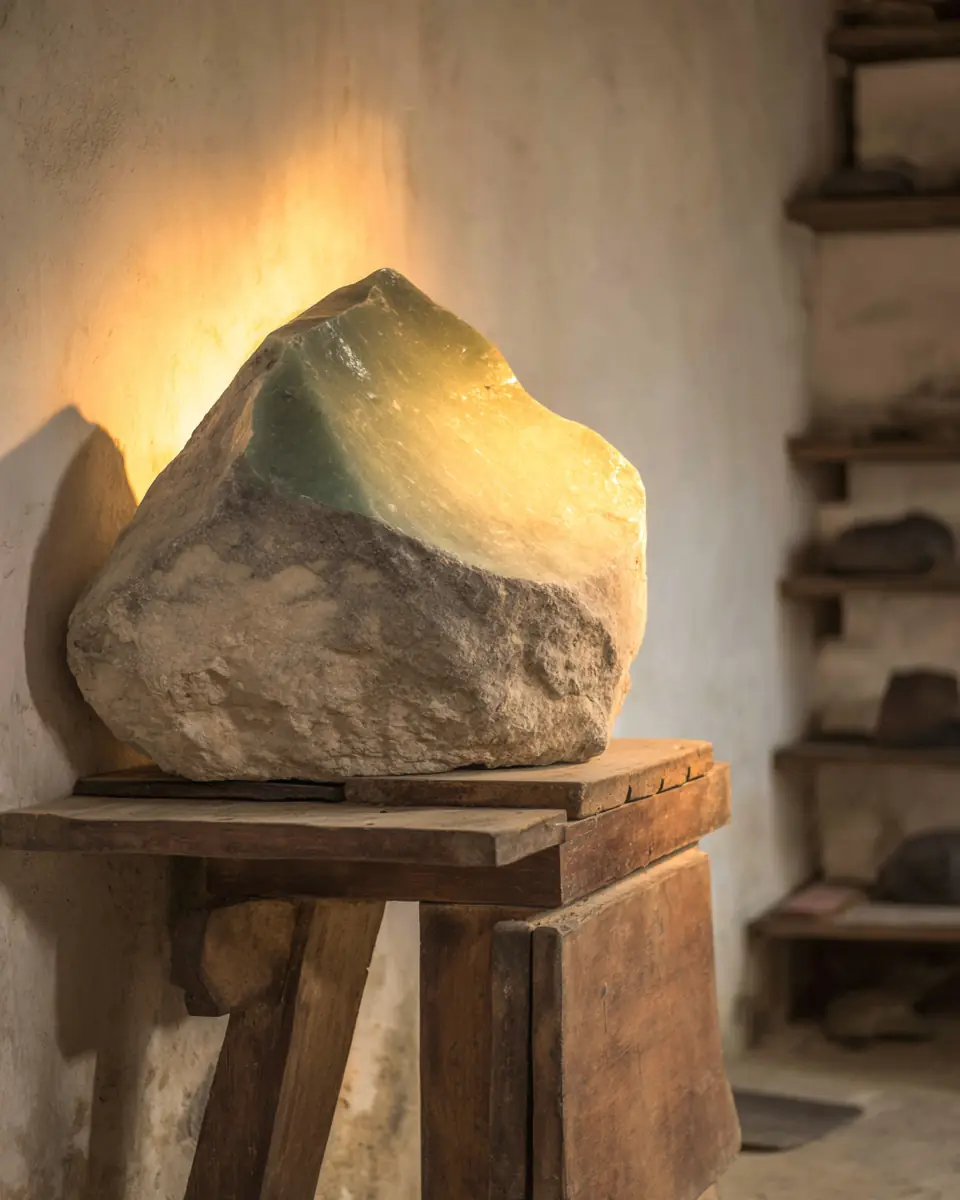
How a stone is read before it is cut.
Rough jadeite keeps its colour beneath a weathered rind, so it is read through a small polished window ground into the skin. What the window shows, colour, translucency and texture, decides how the stone is oriented and how much of it survives into the finished gem, what cutters call the yield. Every later decision depends on this first one: get the orientation right and the colour sits where the eye will find it; get it wrong and no polish can recover it.
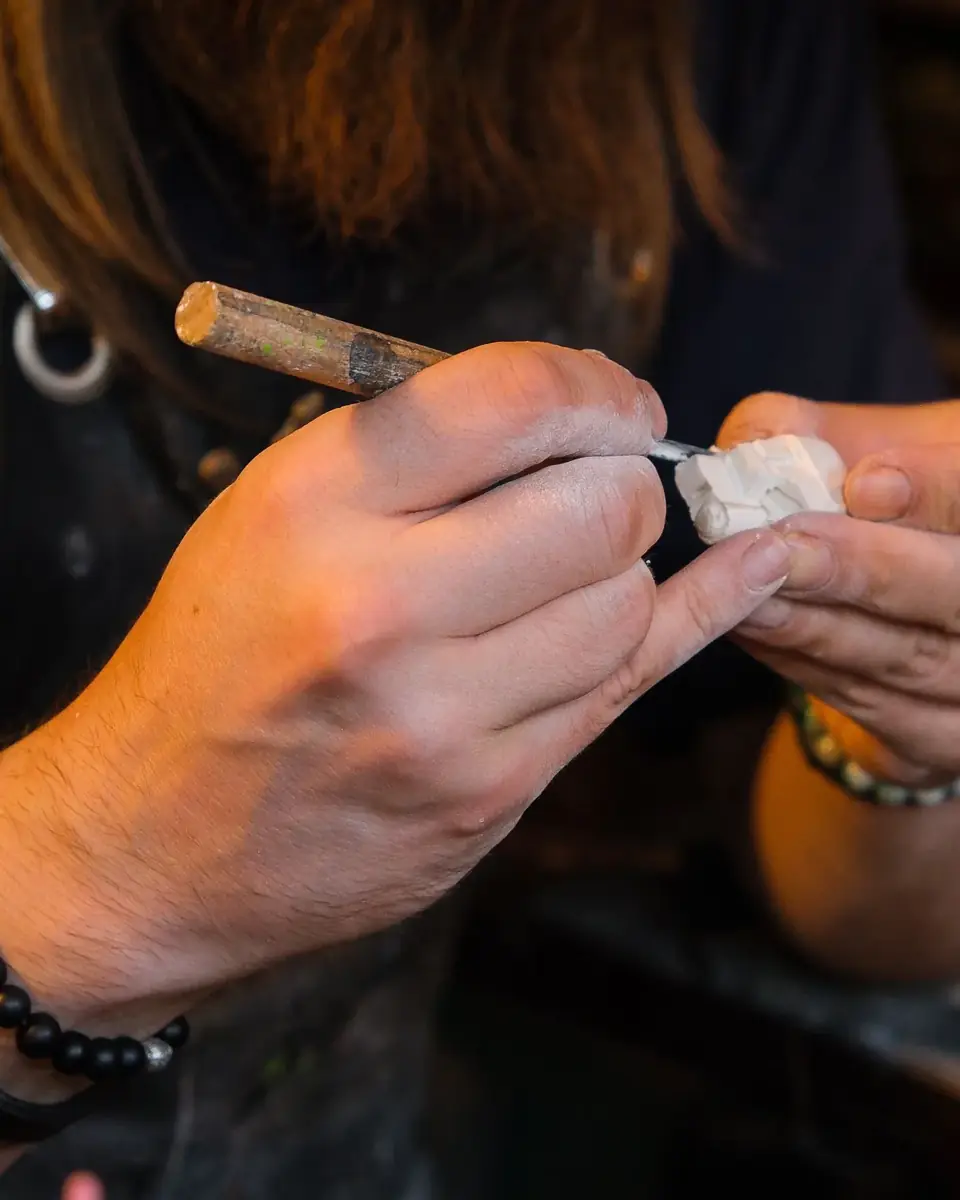
The smooth dome that suits jade best.
A cabochon, a smooth domed top over a flat or gently curved base, is the right cut for translucent and opaque stones whose beauty lies in colour and texture rather than flashing facets. Jade is prized for it, because its interlocking structure resists chipping at the edge.
One of a kind: each leaves this page the moment it sells.
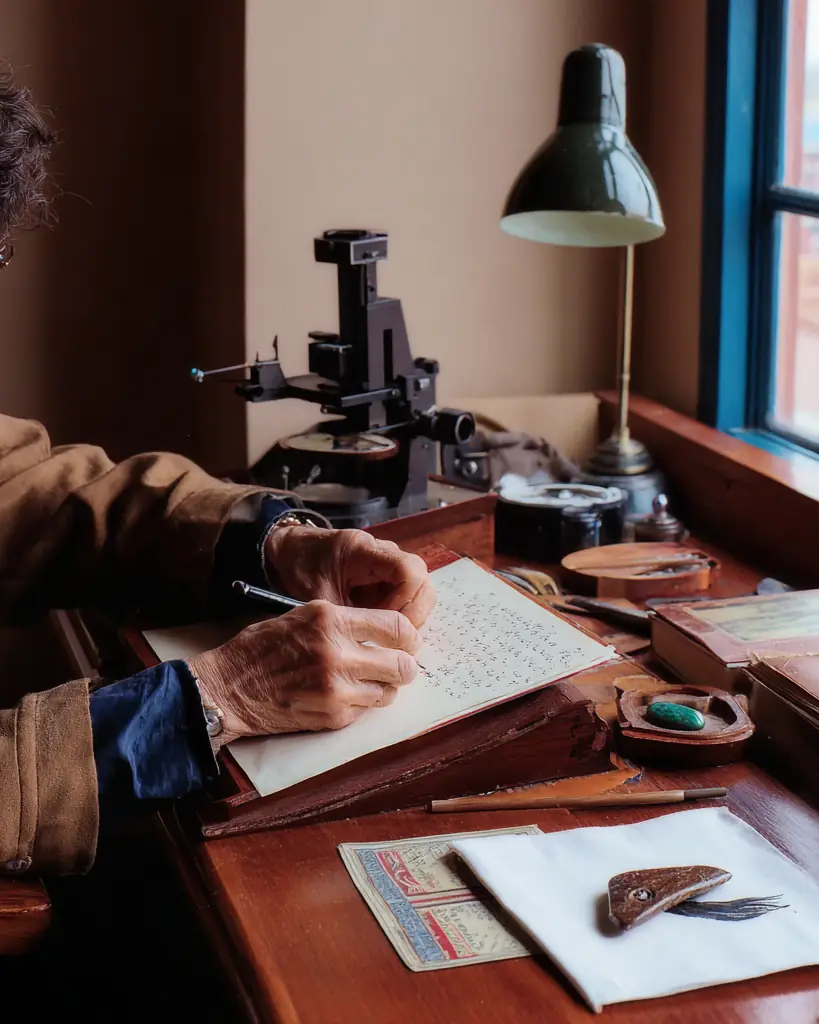
Identification is not valuation.
A laboratory report answers one question: what is this? It identifies the species, states whether the stone is natural, describes any detectable treatment and, for important stones, may offer an opinion on origin. It deliberately avoids stating a value; the leading laboratories are trusted precisely because they are independent of the sale. An appraisal answers the other question, what it is worth, for a stated purpose such as insurance or resale. Keep the two apart, and be wary of an in-house appraisal far above the asking price: that is a sales tactic, not an opinion.
One of a kind: each leaves this page the moment it sells.
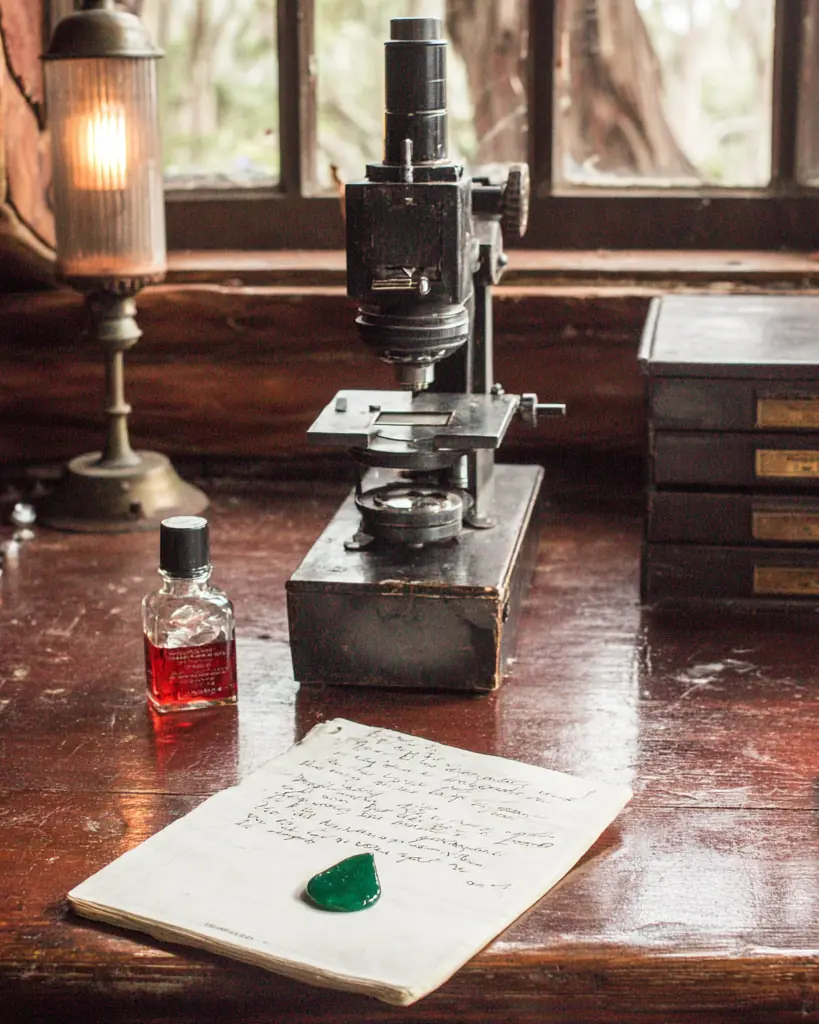
Discipline, not secrets.
Know what you are looking at, what it is worth, and why you are in the deal. Ask for treatment and origin in writing, and for independent documentation of anything valuable. Understand the return policy before money changes hands. Examine the stone yourself whenever you can, with a loupe and good light. And be careful with anything described as a steal: a price far below the market usually means the stone is not what it is claimed to be.
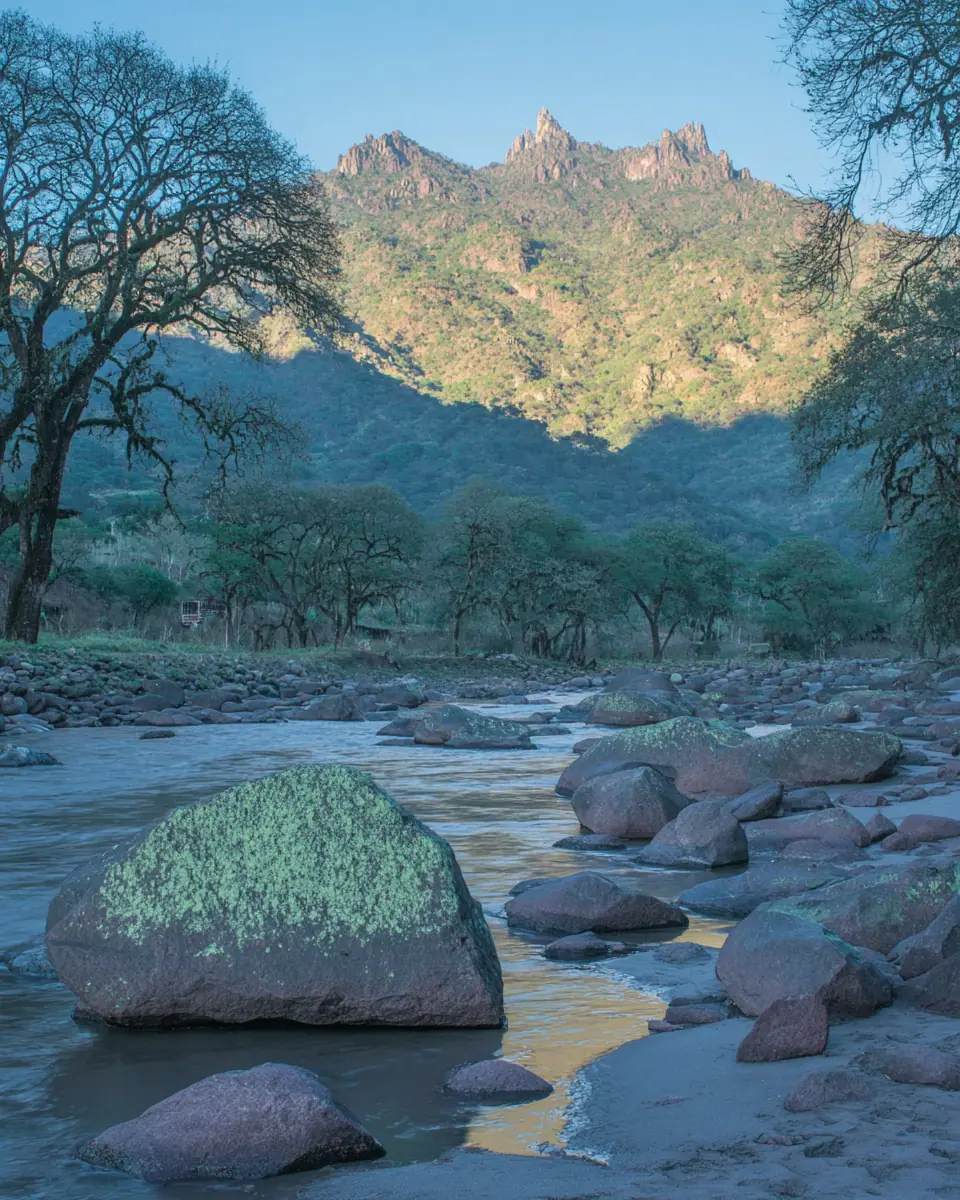
Where it came from, and whose hands it passed through.
Every stone began in the ground and passed through many hands before it reached a display case. Provenance is its documented history; a chain of custody is the paper trail from the rough to the finished gem. For coloured stones there is no single certification scheme, so responsibility rests on relationships: dealers who name the country of origin, support small-scale miners, and welcome questions rather than deflect them. A seller careless about where a stone came from is often careless about what was done to it, too.


No one steps in the same river twice, for it is not the same river, and not the same person.
Every Aratama piece is jadeite from the Motagua Valley, its treatment and origin stated plainly.
View the collection


