


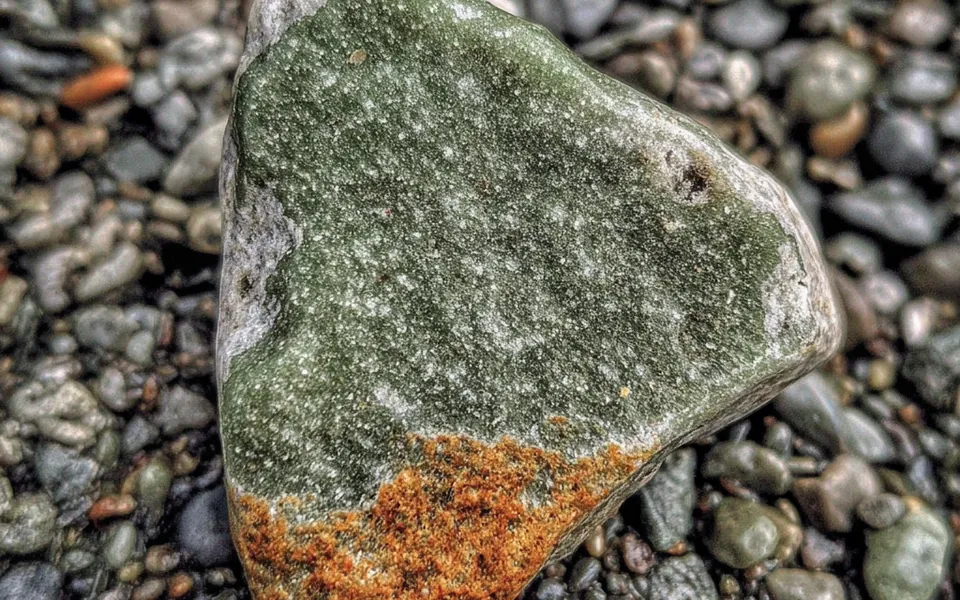
Natural
Jadeite with only traditional surface waxing. It holds its full value.
The stones, the structure, toughness, colour and light, the treatments, the look-alikes.
Jade is a cultural name for two different minerals.
For thousands of years two different minerals were carved and honoured as jade. They look alike and both were worked by hand, yet they differ in structure, in weight and in worth. To know jade is first to know which of the two is in your hand.


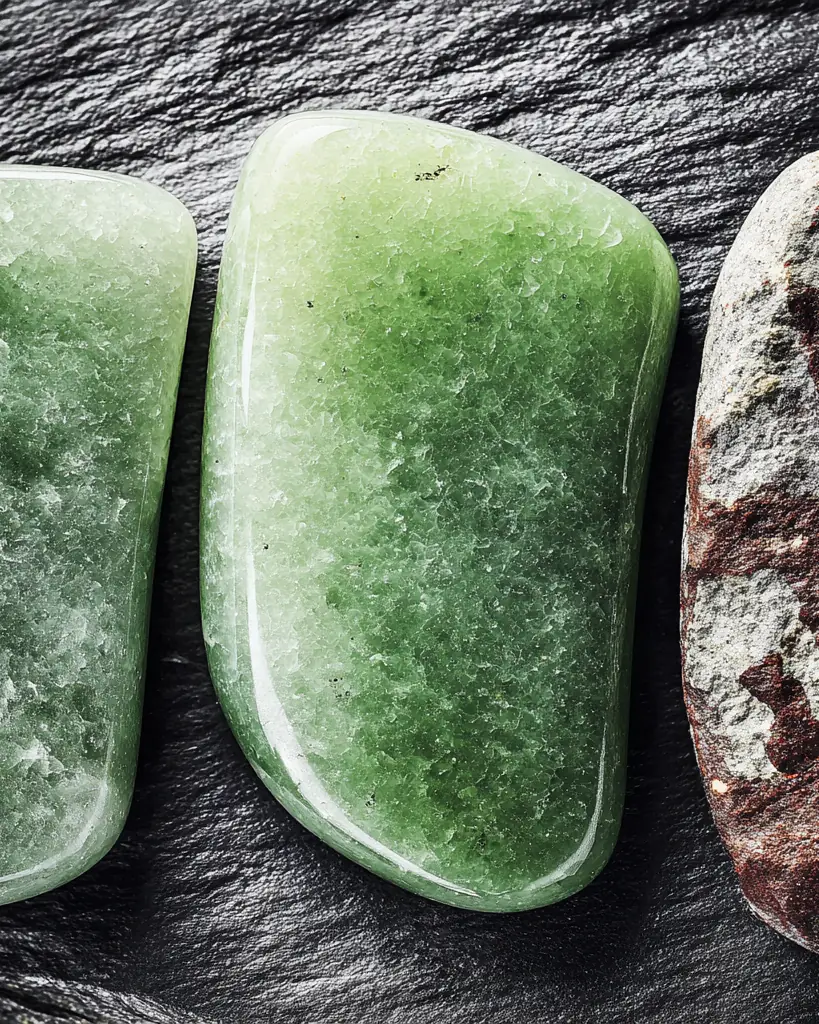
Why jade glows rather than sparkles.
Jade is not a single crystal but an aggregate: countless tiny crystals packed and interlocked, pointing every which way. It shows none of the crisp optical effects of a single crystal, no doubling and no pleochroism, only a single soft spot reading on the refractometer. Look instead for a body colour that is even and slightly cloudy rather than glassy-clear, a texture that may show a granular inner look, and, on well-polished jadeite under reflected light, a faint dimpled surface the trade calls orange peel, where harder and softer grains take the polish unevenly.
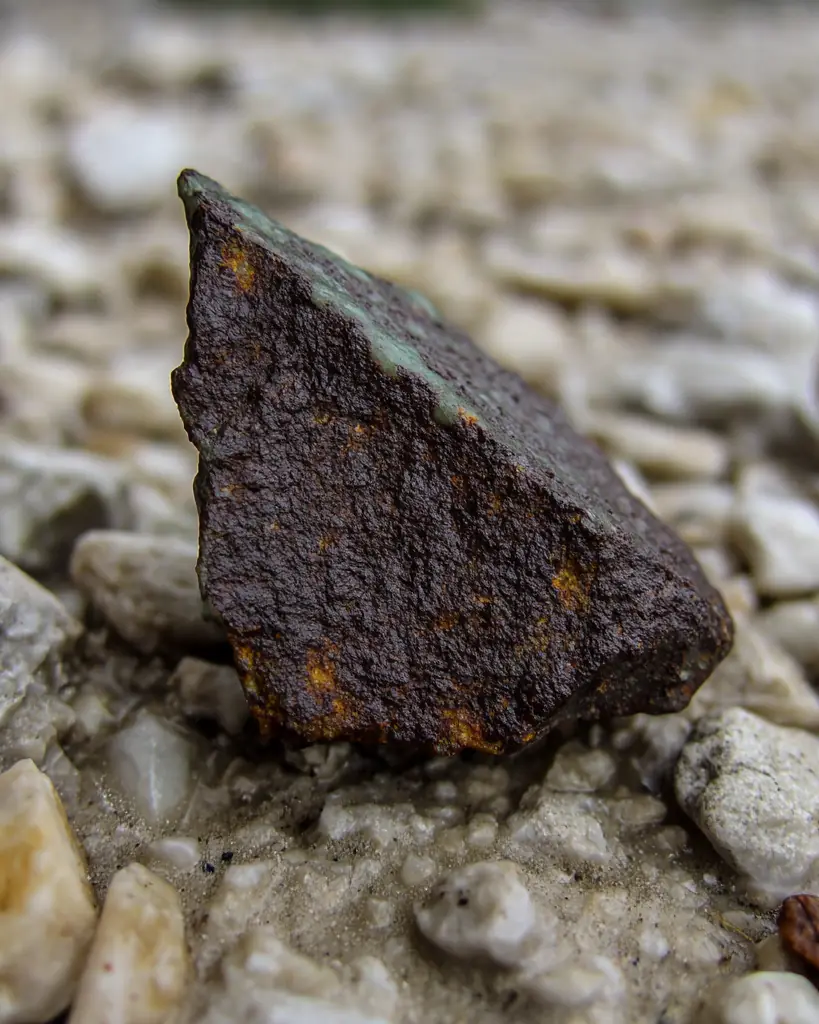
Hardness and toughness are not the same thing.
Hardness is resistance to scratching; toughness is resistance to breaking, chipping and cracking. Diamond is the hardest gem, yet a sharp blow along its cleavage can split it. The jades are the toughest of natural gems: nephrite, with its felted fibres, resists breaking better than anything else, and jadeite is close behind, because both are interlocking aggregates with no cleavage at all. It is why jade has been carved into fine, thin forms for three thousand years.
Three measures of colour, and the glow beneath them.
Coloured stones are not graded like diamonds: colour, not its absence, drives value. Gemologists separate it into distinct dimensions, and jade adds a quality of its own, how deeply light travels into the stone. Learn to see each apart, in neutral daylight, and every piece begins to explain itself.


One of a kind: each leaves this page the moment it sells.

The question to ask of every piece of jadeite.
Treatment is not fraud in itself; what matters is that it is disclosed. For jadeite the trade uses three plain letters, and the difference in value between them is enormous. Because bleaching and dye can be hard to see, significant jadeite should be tested by a laboratory before purchase.
Jadeite with only traditional surface waxing. It holds its full value.
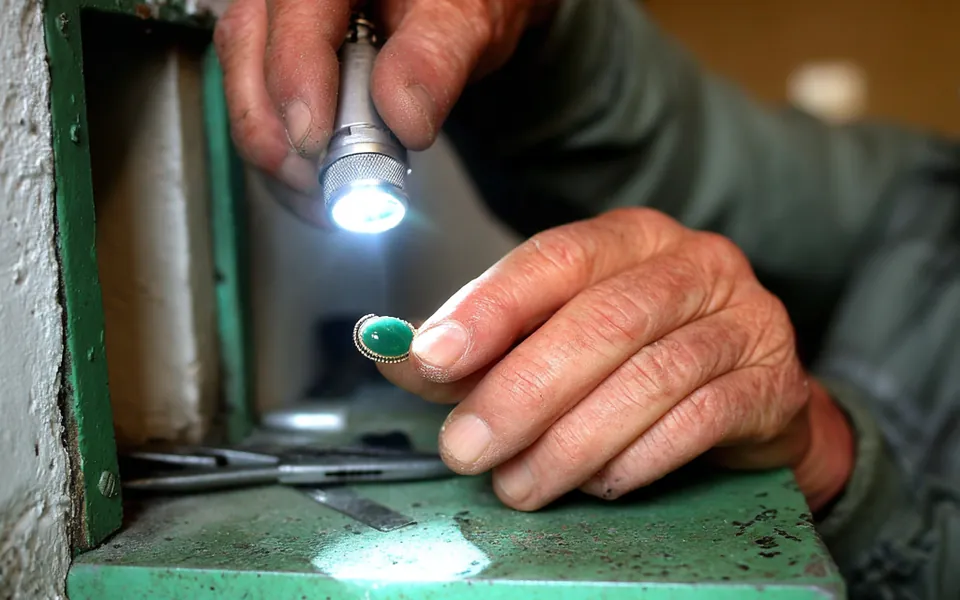
Bleached with acid to remove brown staining, then impregnated with polymer to fill the pores it leaves. It looks fine at first, can degrade over time, and is worth far less.
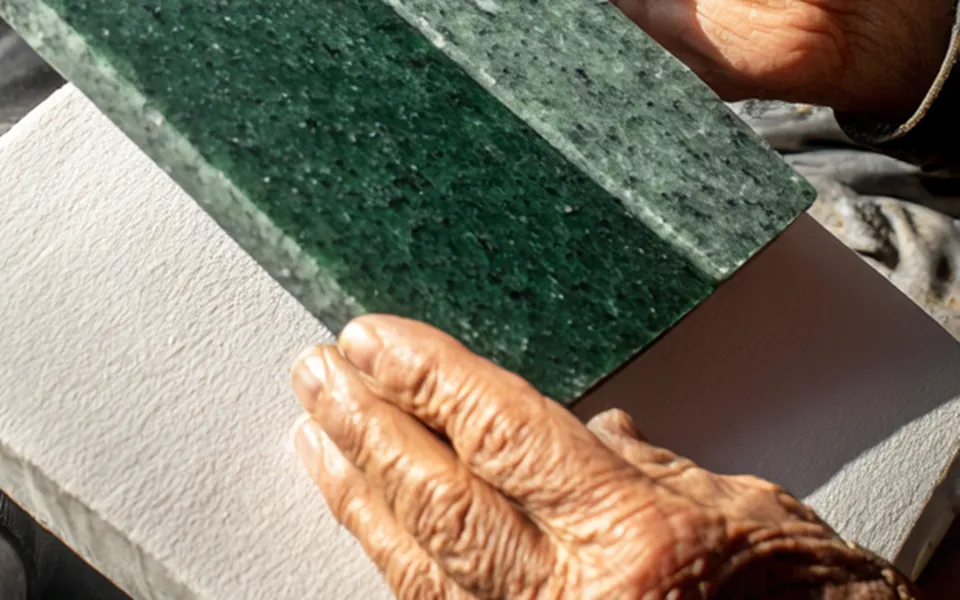
Dyed to add or deepen colour, often green or lavender. It is worth least, and B and C are often found together.
Every Aratama listing names the stone, any treatment, and the laboratory report once the piece is tested.
One of a kind: each leaves this page the moment it sells.
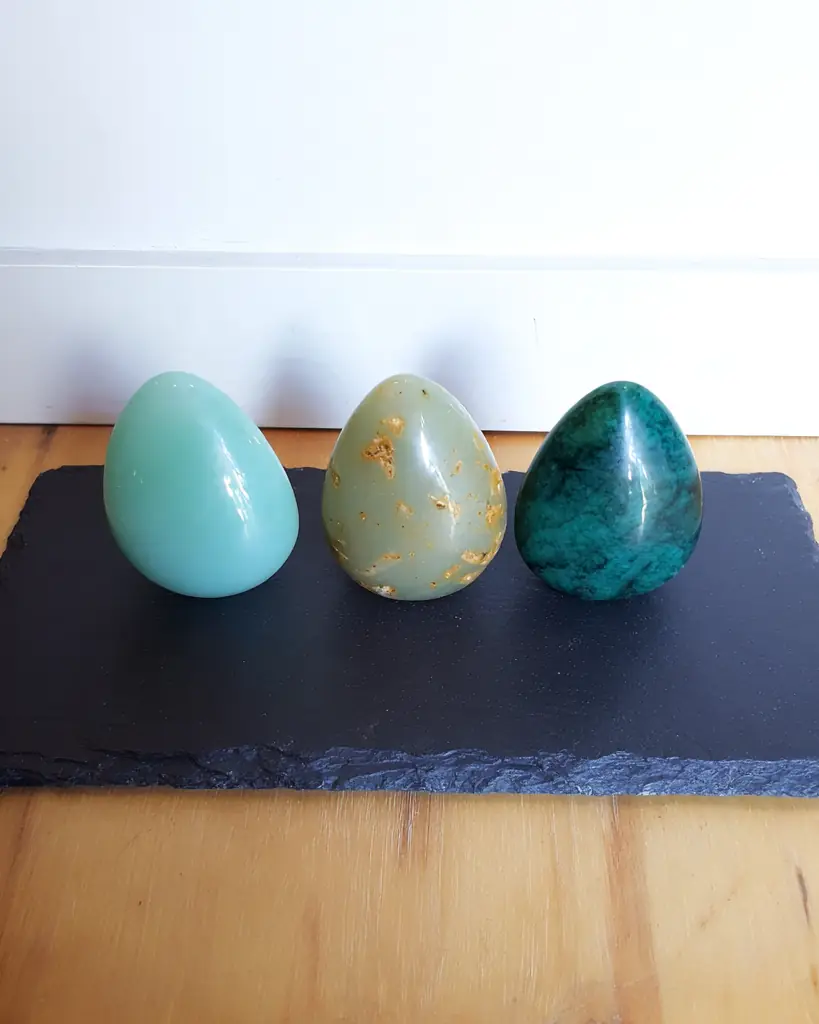
What else is sold under its name.
Many materials are offered as jade: serpentine, chrysoprase and other green chalcedony, dyed quartzite, and amazonite among them. Each is separated by its own properties and by lower toughness. Chalcedony reads a spot refractive index near 1.53 to 1.54, well below either jade, and a stone sold as jadeite that feels light in the hand deserves a second look. When a price seems too good for the apparent quality, the stone, or its treatment, is usually the reason.
Move the colour, the light and the treatment, and read what changes. Pass the loupe over the stone to look closer.
An illustration drawn by the page, not a photograph.
Type A, natural. Under the loupe: a granular texture of interlocking crystals and, on a fine polish, a faint dimpled orange peel.
Type B, bleached and filled. Under the loupe: a fine network of etched channels filled with polymer, and a body that looks washed and too even.
Type C, dyed. Under the loupe: colour gathered in the fractures and along the grain, where the dye has seeped in.
Answer five of six and L’Atelier will write you a certificate of reading.
A certificate of completion from L’Atelier, not a gemmological qualification. Your name stays in your browser.
The gem cannot be polished without friction, nor a person perfected without trials.


A journey of a thousand miles begins beneath one’s feet.
Every Aratama piece is jadeite from the Motagua Valley, its treatment and origin stated plainly.
View the collection


